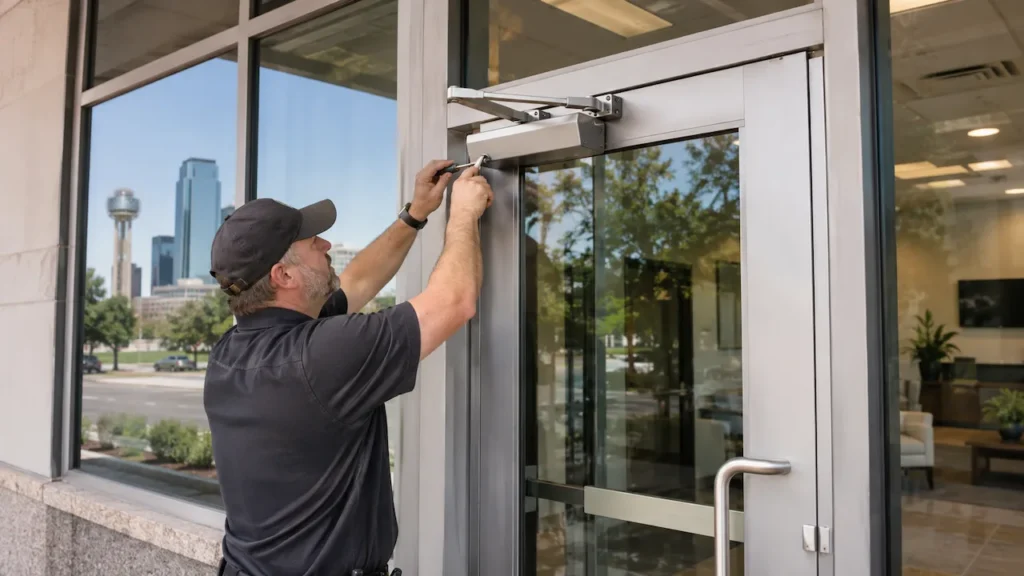
Office door closer slamming can create safety concerns for employees, visitors, and customers in Dallas commercial buildings. When an office door suddenly closes too quickly, the problem may involve hydraulic fluid leaks, incorrect speed settings, loose mounting hardware, or worn internal components. Identifying the cause early can help prevent further door damage and improve entrance safety.
Most slamming closers have either lost hydraulic control from internal leaks, drifted out of adjustment from temperature swings, or accumulated wear from thousands of daily cycles. Here’s how to identify the cause and fix it safely.
What Causes Office Door Closer Slamming?
Office door closer slamming often occurs when the closer can no longer regulate the door’s closing speed. Hydraulic fluid loss, worn valves, incorrect settings, or loose hardware can affect its operation. In some cases, door alignment and building air pressure also contribute to sudden or inconsistent closing.
Hydraulic Fluid Leaks
The most frequent culprit is a leak in the hydraulic chamber. Door closers use pressurized oil to control the closing speed. When a seal wears out or the cylinder cracks, the fluid leaks out and the door loses all resistance. You’ll often see a small puddle of oil on the door frame or floor beneath the closer.
Incorrect Speed Adjustment Settings
Most hydraulic closers have small adjustment screws on the side or bottom. If someone turned these screws the wrong direction or if vibration loosened them over time the closer loses its calibrated speed control. This happens frequently in Dallas high-rises where HVAC pressure changes cause doors to behave differently in summer versus winter.
Worn Internal Components
After 5–10 years of heavy use, the internal springs, pistons, and check valves simply wear out. We see this most often in shared office suites, medical buildings, and retail spaces where a single door gets 200+ cycles per day. The closer still works, but it can’t regulate speed anymore.
Loose Mounting Hardware
If the closer body or arm attachment has come loose from the door or frame, the entire mechanism shifts during operation and can’t maintain proper alignment. This usually creates a slamming sound plus visible wobble when the door moves.
Door Misalignment or Sagging
Sometimes the closer itself is fine, but the door has sagged on its hinges or the frame has shifted. The closer is fighting extra weight or friction and eventually gives up. This is common in older Dallas buildings where foundation settling throws everything slightly out of square.
Warning Signs Before a Closer Fails Completely
- Door speed gradually increases over several weeks
- Intermittent slamming that comes and goes
- Oily residue around the closer body
- Hissing or gurgling sounds during closing
If you catch these early, adjustment or a seal replacement might save the closer. Once it’s slamming hard every time, the internal damage is usually done.
Safety Risks of a Slamming Door Closer
A door that slams shut can catch fingers especially dangerous in daycare centers, medical offices, and schools. It can also damage the door itself, crack glass panels, or break the strike plate loose from the frame. In buildings required to meet ADA accessibility standards, a door closer that exceeds 5 pounds of opening force is a code violation.
Repeated door slamming can also damage nearby locking hardware. If the latch or lock eventually needs replacement, our guide to average lock change costs in DFW provides additional information about factors affecting locksmith pricing.
Don’t try to “fix” a slamming closer by wedging the door open with a doorstop. Fire-rated doors must remain self-closing to meet code, and propping them defeats the entire fire safety system.
What You Can Check Safely
Before calling for service, take a look at the closer adjustment screws usually labeled “S” for sweep speed and “L” for latch speed. Try turning the sweep screw clockwiseone quarter turn and test the door. If that doesn’t restore smooth closing, stop there. Overtightening these screws can strip the threads or blow out seals.
Also check that all mounting screws are tight and the closer arm isn’t visibly bent. Beyond that, leave repairs to someone with the right tools. Door closers contain spring tension that can cause serious injury if released improperly.
When to Replace Instead of Repair
If the closer is more than 10 years old, leaking oil, or has visible cracks in the body, replacement is usually more cost-effective than repair. Modern closers also offer better speed control, backcheck features to prevent door damage, and delayed-action options for accessibility.
A professional inspection can help determine whether your door closer requires adjustment or replacement. Learn what’s included in professional locksmith service calls to better understand the evaluation and repair process.
Frequently Asked Questions
Can I adjust a door closer myself?
You can try minor speed adjustments using the regulation screws, but only turn them a quarter turn at a time. If that doesn’t fix the slamming, the problem is internal and requires professional repair or replacement.
How long do commercial door closers last in Dallas?
Most hydraulic closers last 7–12 years depending on usage. High-traffic doors in office lobbies or retail spaces wear out faster than low-use conference room doors. Dallas heat can also accelerate seal degradation.
Will a slamming door damage the lock?
Yes. Repeated slamming puts stress on the latch bolt and strike plate, which can eventually crack the lock housing or loosen the strike from the frame. Fix the closer before it damages other hardware.
Can temperature affect door closer speed?
Absolutely. Hydraulic fluid thins in heat and thickens in cold, which is why some Dallas office doors slam in August but close fine in January. Quality closers have temperature-compensated fluid, but cheaper models don’t.
Need Office Door Closer Repair in Dallas, TX?
If office door closer slamming continues or the door is closing with excessive force, professional inspection can help identify the underlying problem.
469 Authorized Locksmith assists Dallas businesses with commercial door hardware and locksmith-related problems. Whether the issue involves a leaking hydraulic closer, loose mounting hardware, or incorrect closing speed, the appropriate solution depends on the condition of the door and its components.
Call (469) 820-8669 or contact 469 Authorized Locksmith to discuss your office door closer problem in Dallas, TX.