You turn the key or thumb turn, the bolt moves partway, then stops. Or the deadbolt won’t extend at all. This isn’t just annoying it’s a security problem. Most deadbolt locking failures in Dallas homes come down to alignment issues, worn internal parts, or door movement from settling or weather changes.
Here’s what’s actually happening and when you need professional help instead of YouTube tutorials.
Common Causes of Deadbolt Locking Failures
After years of service calls across Dallas, I see the same core issues over and over. The bolt itself usually works fine the problem is everything around it.
Misaligned Strike Plate
This is the number one culprit. Your door has shifted slightly due to foundation settling, humidity changes, or worn hinges. The deadbolt bolt no longer lines up perfectly with the strike plate hole in the door frame. You’ll feel resistance when you try to lock it, or the bolt hits the edge of the strike plate instead of sliding into the hole.
Door Settling and Seasonal Movement
Dallas homes deal with clay soil that expands and contracts with moisture. Your door frame shifts over time. What locked perfectly six months ago may now catch or bind. Wood doors also swell in humid summer months and contract in winter, changing the alignment just enough to cause problems.
Worn or Damaged Bolt Mechanism
The bolt itself can wear down, bend slightly, or accumulate debris that prevents smooth travel. If your deadbolt is more than 10 years old and sees daily use, internal springs and pins may have weakened.
Loose Mounting Screws
The screws holding the deadbolt to the door can work loose over time, especially on heavy doors or in high-traffic entries. This causes the entire lock to shift position, throwing off alignment even if the door and frame haven’t moved.
Warning Signs Your Deadbolt Needs Attention
- You have to lift or push the door to get the deadbolt to engage
- The bolt extends only halfway before stopping
- You hear grinding or scraping when turning the key or thumb turn
- The bolt visibly misses the strike plate opening
What You Can Safely Check Yourself
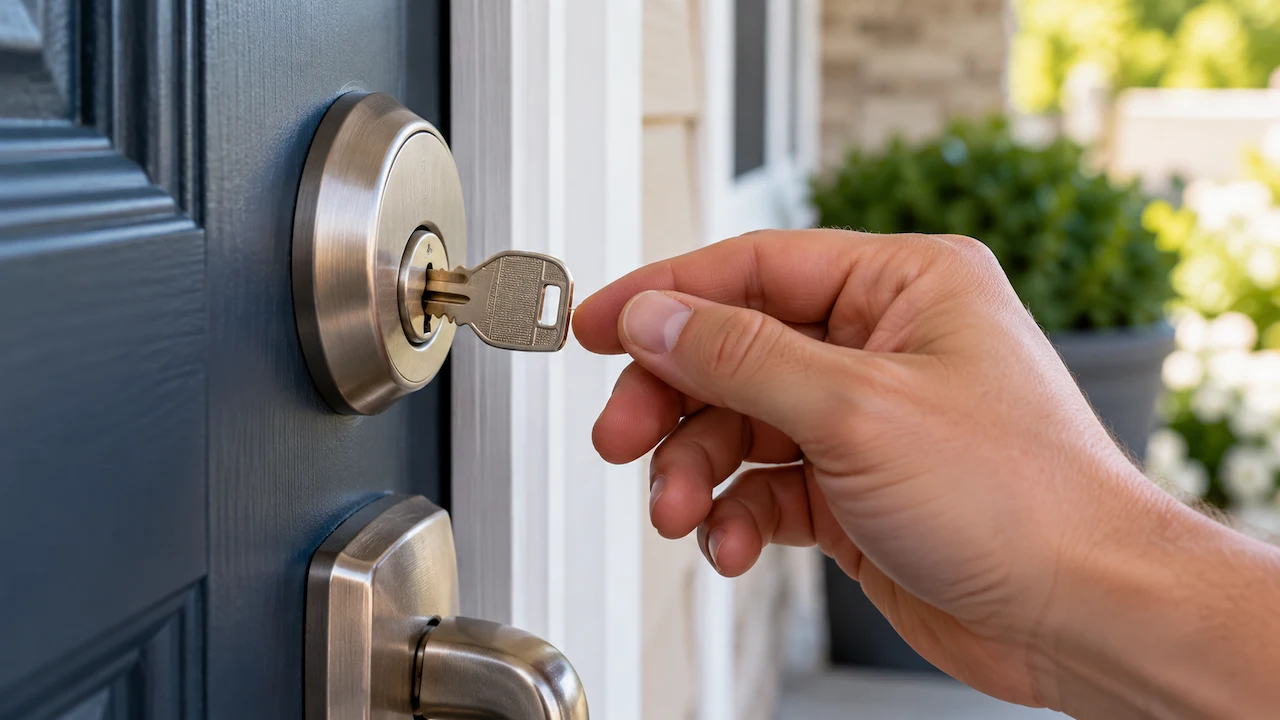
Before calling anyone, try this: with the door open, turn the deadbolt to the locked position. Does the bolt extend and retract smoothly? If yes, the lock mechanism itself is probably fine the problem is alignment.
Close the door slowly while watching the bolt meet the strike plate. Does it line up? Is it hitting high, low, or to one side? That tells you where the misalignment is.
Check if the mounting screws on the interior side of the lock are tight. If they’re loose, tightening them may solve the problem immediately.
That’s as far as I recommend going on your own. I’ve seen too many homeowners make things worse by filing down strike plates at the wrong angle or removing material from the bolt itself.
When to Call a Locksmith Instead of DIY
If tightening screws doesn’t fix it, professional lock repair services can help identify alignment issues, damaged hardware, or worn internal components. Strike plate adjustment requires precision moving it even 1/8 inch in the wrong direction can weaken your door’s security or damage the frame.
We carry the tools to measure alignment properly and reinforce strike plates with longer screws that actually reach the framing studs, not just the trim. That’s what makes a deadbolt secure not the lock itself, but how it’s anchored.
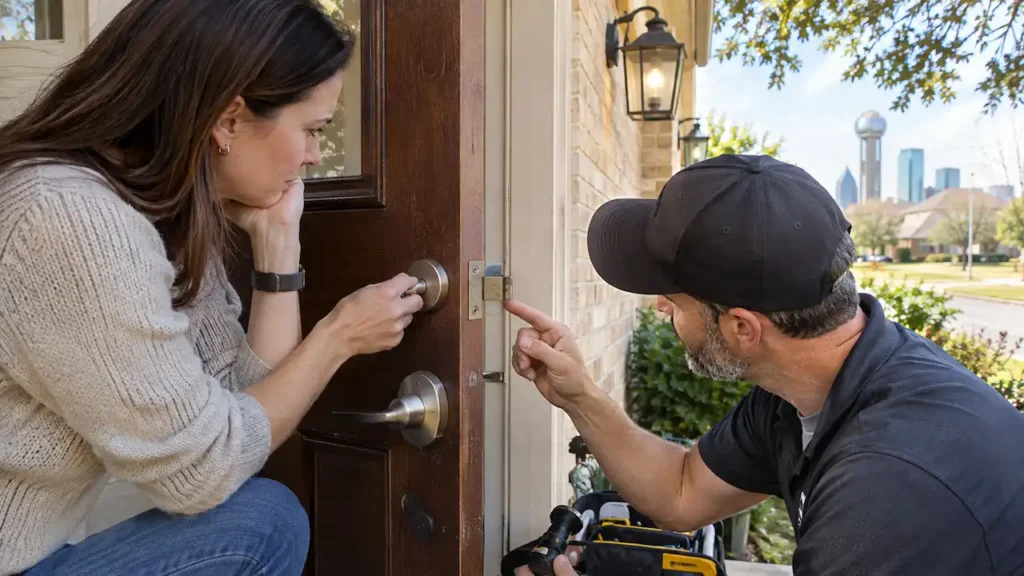
Aprofessional locksmith inspection usually takes 15 minutes and gives you a clear answer: simple adjustment, hardware replacement, or a bigger door/frame issue that needs a carpenter.
Repair vs. Replacement
Professional lock replacement services may be necessary if the internal mechanism is damaged or replacement parts are no longer available.Most deadbolt locking problems are fixable with adjustment or strike plate replacement. Full lock replacement is only necessary if the internal mechanism is damaged or the lock is so old that parts aren’t available.
If you’re thinking about replacement anyway,replacement costs in the DFW area vary based on lock grade and whether you want keyed-alike convenience across multiple doors.
Security Concerns You Shouldn’t Ignore
A deadbolt that won’t lock leaves your home vulnerable. Don’t leave it unlocked overnight or when you’re away. If you can’t get it fixed immediately, at least use the door’s handle lock and consider a temporary security bar or wedge until a locksmith can visit.
Frequently Asked Questions
Can I just file down the strike plate to make it fit?
You can, but you’ll likely make alignment worse or create a gap that weakens security. Strike plates need to be repositioned, not enlarged, in most cases.
Why does my deadbolt work fine in winter but not in summer?
Wood doors swell with humidity. Summer in Dallas brings moisture that expands the door just enough to throw off alignment. It’s seasonal and very common.
How much does it cost to fix a deadbolt that won’t lock in Dallas?
Simple adjustments typically run 75–125 for a service call. If you need a new strike plate, longer screws, or lock replacement, expect 100–250 depending on hardware quality.
Is a deadbolt that’s hard to turn a sign it’s about to fail?
Yes. Resistance means something is binding either alignment is off or internal parts are wearing out. Address it before it stops working completely.
Ready to get started in Dallas?
469 Authorized Locksmith is here to help with deadbolt not locking Dallas TX in Dallas. Reach out today and we’ll walk you through your options, answer your questions, and book a time that works for you.
Call (469) 820-8669 or visit 469 Authorized Locksmith to schedule your Dallas appointment.